
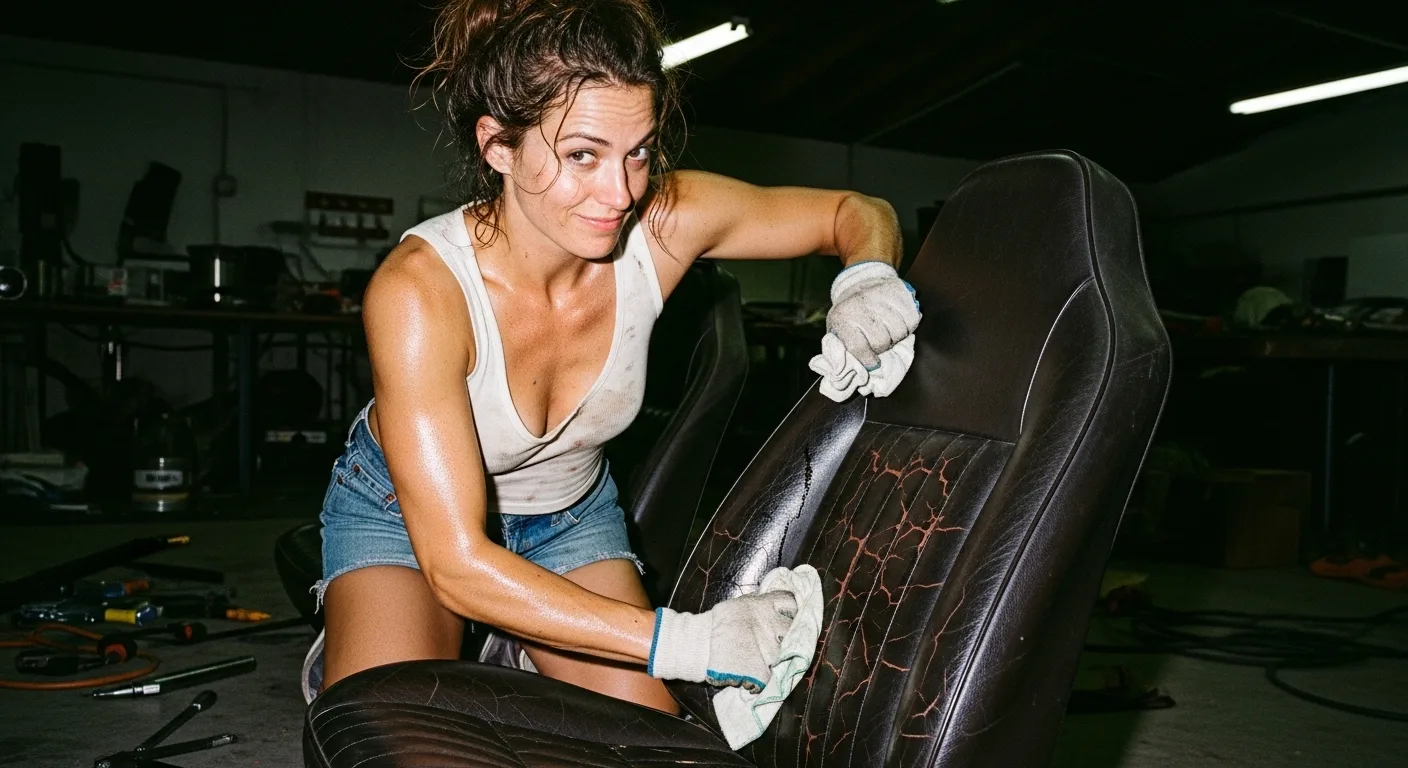
There is a specific smell associated with a “barn find.” It’s a mix of gasoline, mouse droppings, and dried-out, dead cow hide.
I see this constantly. A guy buys his dream car—a ’78 911 or an old Jag—and the engine runs okay, but the seats feel like cardboard left out in the sun. They are rock hard, cracked, and make a terrible crunching sound when you sit down.
The immediate reaction is to either burn $5,000 on a full reupholstery job or, worse, slather it in some cheap spray-bottle “conditioner” that just makes it greasy.
Stop. If the leather isn’t torn wide open, it can usually be saved. But you can’t just moisturize it; you have to resurrect it. This is messy, slow work. Here is how the pros bring the dead back to life.
Key Takeaways: The Restoration Rules
- Silicon is the Enemy: Never use cheap, shiny spray dressings (like Armor All) on real leather. They seal the pores and accelerate cracking.
- Heat is Essential: Conditioners won’t penetrate cold, hard leather. You need to create a “sauna” effect.
- Patience Pays Off: This isn’t a 20-minute job. Real rehydration takes days.
Step 1: The Deep Strip (Get the Dirt Out)
You cannot hydrate dirt. If you put expensive conditioner on top of 40 years of grime, you are just making expensive mud.
Most old leather is shiny. That’s bad. Clean leather should be matte. The shine is body oil, dirt, and old product blocking the pores.
The Protocol: You need a dedicated leather cleaner (I use Leatherique or Colourlock) and a horsehair brush. Do not use a stiff nylon brush; you’ll scratch the hide. Scrub in circles until the foam turns brown. Wipe it away with a microfiber. Repeat until the leather is dull and tacky to the touch.
Step 2: The “Feeding” (The Garbage Bag Trick)
Now that the pores are open, you need to replace the natural fats and oils that evaporated decades ago.
Nivea hand cream is for hands, not a ’69 Mustang. You need heavy, lanolin-based restorative oils. This stuff is thick, gooey, and smells like a farm animal.
The Protocol:
- Slather the oil on thick. Use your hands (wear gloves, trust me). It should look wet.
- The Secret Sauce: Roll up the windows and park the car in the direct sun. If it’s winter, put black garbage bags over the seats to trap heat.
- The heat opens the hide’s fibers and allows the oil to sink deep, rather than just sitting on top.
Step 3: The Wait and Wipe
Leave it for at least 24 hours. If the seats were truly cardboard, leave it for 48.
When you come back, the seats will look hazy and sticky. This is good. It means the leather drank what it needed and pushed the proteins and remaining dirt to the surface. Take a damp warm cloth and wipe off the excess residue.
The result won’t look brand new, but it will be soft, pliable, and smell like expensive leather instead of an old attic.
My Hands Are Covered in Lanolin.
I’m currently doing Step 2 on the passenger seat of the shop’s project car. It is incredibly messy, satisfying work.
If you want to see the exact technique I use to work the oil into the stitching without ruining it, the garage cameras are on.
[BUTTON: Watch Charlie Work the Leather Live] (Link to your Cam Landing Page)
FAQ: Leather Restoration
Can I use olive oil or coconut oil? Absolutely not. Food-grade oils will go rancid inside the leather. Your car will smell like rotten food within a month. Stick to automotive leather products.
What about the cracks? Rehydration will soften the edges of the cracks so they don’t get worse, but it won’t make them disappear. To fix cracks, you need leather filler and dye, which is a whole different article. This is just about getting softness back.
How often should I do this? A deep “resurrection” only needs to happen once. After that, a light conditioning every 3-6 months will keep it healthy.
